2016. október 13.

La lingua più antica del mondo


La comunicazione è un bisogno umano. Alcuni credono addirittura che i bambini siano in grado di comprendere qualsiasi lingua dato che, in fondo, la comunicazione è molto di più di un semplice concatenarsi di parole.

Nel mondo attuale esistono circa 6500 lingue diverse ma la domanda che continua a tormentare gli esperti da secoli è: qual è la lingua più antica del mondo?
Sono state formulate diverse teorie al proposito e oggi ve le mostriamo.

Secondo la Bibbia, tutti gli uomini parlavano la stessa lingua e possedevano lo stesso vocabolario. Gli uomini però, un po’ presuntuosi, avevano deciso di conoscere Dio e per questo avevano iniziato a costruire una torre che si elevava verso il cielo: la famosa Torre di Babele.
Il Signore si sentì offeso per l'insolenza dei suoi figli e decise di confonderli, facendogli parlare lingue diverse. Il risultato fu dei peggiori: non potevano più capirsi e comunicare tra loro e per questo, furono incapaci di terminare la costruzione della torre.
Questo, secondo la Bibbia, è il motivo per cui al mondo gli uomini parlano lingue diverse.
Nonostante la storia sia molto originale, penso di poter affermare che la teoria oggigiorno suona poco credibile e sicuramente senza alcun fondamento scientifico.

Nel corso dei secoli si sviluppò una nuova teoria, quella della “protolingua”.
Secondo questa ipotesi, tra centomila e duecentomila anni fa, esisteva anche una sola lingua che era l’antenata comune di tutte le lingue del mondo più recenti. Il primo scienziato a sostenere quest’idea fu il linguista italiano Alfredo Trombetti, nel 1905.
I sostenitori di questa teoria, attribuiscono alle famiglie linguistiche di tutto il mondo sviluppi indipendenti derivanti da un’unica forma proto-linguistica di comunicazione utilizzata dall’ Homo sapiens.

Gli studiosi dell’University di Reading, in Inghilterra, hanno cercato di ricostruire i fondamenti di questa protolingua e, analizzando attraverso un programma informatico le sette famiglie linguistiche del continente euroasiatico, hanno individuato un nucleo di 23 radici comuni. Sono riusciti così a stabilire quale probabilmente potesse essere la proto-lingua che regolava la comunicazione di base tra gli uomini del paleolitico.

Ma nel corso degli anni si sono sviluppate ulteriori teorie vole alla ricerca della lingua più antica del mondo.

Secondo alcuni il tamil (lingua dravidica parlata in India, Sri Lanka, Singapore e in altri Paesi sull’Oceano Indiano) è l'ultima lingua classica ad essersi conservata pressoché invariata sin dai tempi della sua prima attestazione e per questo la considerano come la più antica del mondo.

Un altra teoria ritiene, invece, che la lingua albanese sia la lingua più antica di tutta Europa dal momento che appartiene a un ramo completamente separato da quelle che si chiamano lingue indoeuropee e non deriva da nessun’altra lingua conosciuta.

Come vedete le teorie sono tante e spesso contrastanti tra di loro.

Allora, qual è la prima lingua del mondo?

2015. augusztus 31.

Brain Benefits Of Bilingualism

New Study Shows Brain Benefits Of Bilingualism

Brain Benefits Of Bilingualism

The largest study so far to ask whether speaking two languages might delay the onset of dementia symptoms in bilingual patients as compared to monolingual patients has reported a robust result. Bilingual patients suffer dementia onset an average of 4.5 years later than those who speak only a single language.
While knowledge of a protective effect of bilingualism isn't entirely new, the present study significantly advances scientists' knowledge. Media reports emphasize the size of its cohort: 648 patients from a university hospital's memory clinic, including 391 who were bilingual. It's also touted as the first study to reveal that bilingual people who are illiterate derive the same benefit from speaking two languages as do people who read and write. It also claims to show that the benefit applies not only to Alzheimer's sufferers but also people with frontotemporal and vascular dementia.
Only when I read the research report itself, though, published in the journalNeurology and written by Suvarna Alladi and 7 co-authors, did I realize fully the brilliance of conducting this study in Hyderabad, India.
That choice of location, I believe, lends extra credibility to the study's results.
Here's why. India, as the researchers note, is a nation of linguistic diversity. In the Hyderabad region, a language called Telugu is spoken by the majority Hindu group, and another called Dakkhini by the minority Muslim population. Hindi and English are also commonly spoken in formal contexts, including at school. Most people who grow up in the region, then, are bilingual, and routinely exposed to at least three languages.
The patients who contributed data to the study, then, are surrounded by multiple languages in everyday life, not primarily as a result of moving from one location to another. This turns out to be an important factor, as the authors explain:
In contrast to previous studies, the bilingual group was drawn from the same environment as the monolingual one and the results were therefore free from the confounding effects of immigration. The bilingual effect on age at dementia onset was shown independently of other potential confounding factors, such as education, sex, occupation, cardiovascular risk factors, and urban vs rural dwelling, of subjects with dementia.
In other words, thanks in large part to the study's cultural context, these researchers made great progress zeroing in on bilingualism as the specific reason for the delay in dementia symptoms.
What exactly is it about the ability to speak in two languages that seems to provide this protective effect? Alladi and co-authors explain:
The constant need in a bilingual person to selectively activate one language and suppress the other is thought to lead to a better development of executive functions and attentional tasks with cognitive advantages being best documented in attentional control, inhibition, and conflict resolution.
Intriguingly, when a patient speaks three (or more) languages, no extra benefits accrue neurologically. Speaking a single language beyond one's native tongue is enough to do the trick.
So, now, my almost-monolingual brain is jealous.
I do know some conversational French, and I squeaked by speaking and comprehending enough Swahili to be polite and interactive while living in Kenya. But I've regretted not working up to full fluency in a second language. (As the "Learn to Speak Italian" tapes strewn around my house demonstrate, I haven't given up on this goal.)
The sounds of multiple languages swirling around me when I visit New York or Parisare enchanting, and I enjoy discussing with bilinguals the claims that switching between languages allows different personality traits to emerge within a single individual.
Being bilingual opens up new worlds of global connection and understanding, and almost certainly allows some degree of flexibility in personal expression, too.
Now we know, more concretely and convincingly than before, that there's a brain benefit to bilingualism, too.

2015. július 20.

Funny video about bilingual people


I found this video very funny and interesting. I think it's really true for me. And what about you?

Bilingual people
https://www.youtube.com/watch?v=ReHdQsB5rI8

2015. július 13.

Emotions in languages


Emotions in languages 


Are you a bilingual? Which language do you prefer to use in emotional situations? Does your emotional state affect your language choice? How do you express yourself when you are in love, happy, angry, upset and so on? Which language do you choose to swear or to lie? 


Emotions in languages

„In bilingual societies, people frequently switch between languages, particularly in emotional situations. Researchers from the University of California, Berkeley and Bard College say that such code-switching is a strategy to express emotions differently, particularly when communicating with children. "Bilingual parents may use a specific language to express an emotional concept because they feel that language provides a better cultural context for expressing the emotion. For example, a native Finnish speaker may be more likely to use English to tell her children that she loves them because it is uncommon to explicitly express emotions in Finnish."


2015. július 11.

she speaks Italian perfectly....

No comment :D

https://www.youtube.com/watch?v=Vc8tfioOKvU

The Offensive Translator


..... but she speaks Italian perfectly :D

2015. július 9.

Bilingualism in adulthood


"Bilinguals acquire their two or more languages in childhood."

WRONG. 

Bilingualism in adulthood 


One can become bilingual in childhood, but also in adolescence and in adulthood. In fact, many adults become bilingual because they move from one country (or region) to another and have to acquire a second language. With time, they can become just as bilingual as children who acquire their languages in their early years (minus the native speaker accent). In general, people become bilingual because life requires the use of two or more languages. This can be due to immigration, education, intermarriage, contact with other linguistic groups within a country, and so on.

http://www.francoisgrosjean.ch/myths_en.html 

2015. július 8.

Aspects of Culture Beyond Language

Here is an interesting article about

Aspects of Culture Beyond Language
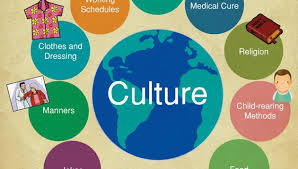


                                                               Culture Beyond Language


Here are a few of the things a bicultural individual experiences from more than one perspective, in addition to language and speech itself:
1. Food


Cultural or “heritage” dishes are generally influenced by the staples that were available wherever that particular culture and language was established.


Dining cross-culturally can be a linguistic experience — most Americans, for example, know that “con arroz” means “with rice” in Spanish, simply from the prevalence of Latin American foods in the United States.


However, it is possible to eat culturally-influenced meals without knowing any of the parent language, and many children do, particularly in households where immigrant parents or grandparents cook, but children are raised speaking the local language.


Some traditions go beyond just the kinds of food used, and affect how they are eaten as well — the difference between using chopsticks and forks, for example, or between eating omelets and other egg dishes for breakfast (United States) and for evening meals (Eastern Europe and parts of Latin America).


One of the advantages of introducing children to bicultural eating as well as language when they’re young is that it becomes less of a culture shock when they travel later in life. They’re already familiar with the traditional foods of their heritage country. And, as an added bonus, it gets them used to the idea of a varied diet in general — a good way to help discourage picky eating habits!
2. Folk Art


The broad category of “folk art” includes music, dance, folklore, and traditional cultural crafts.


Some cultures have very specific and guarded ones — Japanese flower arranging and calligraphy, for example. Others are practiced all over the world in different styles, such as pottery or even things as common as painting and stringed instruments.


Exposing a bilingual child to cultural art as well can be useful in a couple of different ways. Obviously, it gives them something to appreciate that they wouldn’t normally encounter, but it can also open up new vocabulary, and it can be very revealing about a culture as well. Something as simple as listening to a piece of music by a Russian composer and then one by a contemporary German composer gives even a casual observer a good understanding of some of the differences between the two cultures.
3. Celebrations


Children like this one, because it usually means at least twice as many holidays in the household!


Bringing in holidays from other culture is a start to explaining everything from religious plurality to the differences in calendar systems.


It’s also good motivation, especially when you can explain that Russian-speakers have their own Santa, who only brings presents for Russian-speaking children. You’ll be amazed how prolific the Russian use gets around Christmas time…
4. Jokes


Humor is very difficult to translate.


Even after years of living together, bicultural couples can struggle to understand one another’s humor. But don’t let that difficulty scare you away from it — instead, ask to have jokes explained, and work through why they’re funny in their original cultures. If you understand a culture’s humor, you’re very well-immersed!


Introducing children to multicultural humor is surprisingly easy. Most toys, books, and TV shows marketed toward kids is humor-based already. If you want to give them a grounding in another culture’s humor, just let them watch some silly cartoons — the things that culture finds amusing will become apparent very quickly. You may even learn something yourself.
5. Manners


Teaching manners in just one culture can be a challenge.


You may need to wait until children are older to start explaining to them some of the differences between what separate cultures find polite.


It can be important to go over multicultural manners, especially if you travel, however. For example, Americans tend to smile at strangers as their default — if you make eye contact, you smile, and sometimes nod or even speak a greeting. In other parts of the world (including Russia and Ukraine), strangers tend to avoid acknowledging one another except when they actively interact.


Children don’t always understand the differences, and you may need to do some explaining to make sure they aren’t feeling slighted or punished simply by being immersed in a culture that doesn’t interact the way they’re used to.
6. Clothes and Dressing


Apart from “heritage festivals,” most countries have globalized their fashions to at least some degree. We may know what a culture’s traditional clothing used to look like, but the reality is that most Japanese people do not wear kimonos every day, nor do Germans wear lederhosen and dirndls.


That said, even in countries that share a basic wardrobe (such as the Western business dress used in North America and Western Europe), standards and fashions can vary widely. Most Continental Europeans find Americans extremely sloppy in dress, while sharp-dressed Americans tend to see their British counterparts as too stuffy and the Europeans as too fashion-forward.


Children are usually better off when they’re dressed in the dominent costume, rather than in heritage clothing, at least when they go to school. Save other cultural clothing for special occasions, or for travel.
7. Working Schedules


This usually affects the parents more than the children, but different countries and cultures have very different approaches to work schedules.


The United States tends to be early-rising, with a strong urge to end the workday by 5:00 or 6:00 PM, while Europeans often start and end later. Spanish and Latin-influenced countries share the “siesta,” an hour or two of time off in the middle of the day. And nearly every country has better vacation time for workers than the United States — an unfortunate burden for U.S. parents.


Your children will adapt to your schedules, so if you want them to experience bicultural work patterns, you may need one parent to be on one schedule and the other on another. If this is inconvenient or impossible for you, you may not get to include them in that aspect of biculturalism except on vacations and during other travel.

http://bilingualkidsrock.com/bilingualism-vs-biculturalism/